





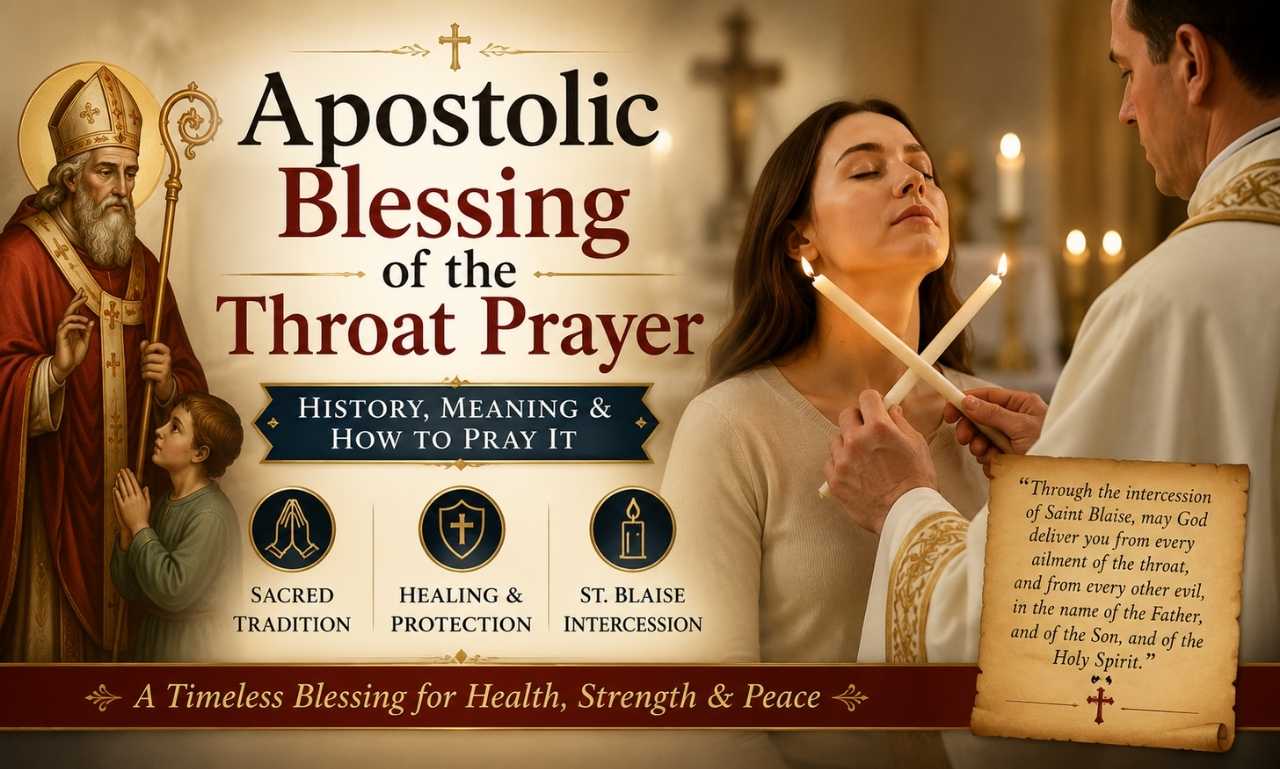
Every February, Catholics across the world kneel at the front of their churches, tilt their heads back slightly, and feel two crossed candles rest gently against their throats. A priest or deacon speaks a short, centuries-old line asking for protection from illness. That moment is the apostolic blessing of the throat prayer, one of the oldest and most beloved Catholic sacramentals in the Church’s calendar.
If you’ve ever wondered where this Catholic blessing of the throat came from, what the prayer actually says, or how to pray a version of it yourself at home, this guide walks through all of it — the history, the meaning, the full liturgical text, and practical ways to use it in daily life.
What Is the Apostolic Blessing of the Throat Prayer?
The apostolic blessing of the throat prayer is a Catholic sacramental prayer asking God, through the intercession of Saint Blaise, to protect a person from diseases of the throat and other illness. It is traditionally prayed on or around February 3, the Feast of St. Blaise, though many parishes and individuals also turn to it any time someone is dealing with a cough, sore throat, laryngitis, or difficulty swallowing.
Unlike a sacrament, a Catholic sacramental doesn’t carry the same theological weight as Baptism or the Eucharist. Instead, it’s a sacred sign the Church offers to prepare people to receive grace and to draw their hearts toward God during ordinary struggles — in this case, a very physical, very human one: the fear of losing your voice, your ability to eat, or your health altogether. This is exactly why the St. Blaise throat blessing has remained so popular for nearly two thousand years.
The Story Behind the Blessing
To understand the apostolic blessing of the throat prayer, it helps to understand the man behind it.
Saint Blaise was a bishop in Sebaste, a city in ancient Armenia now known as Sivas, Turkey. Historical records about his life are thin, but tradition holds that he was a physician before entering religious life, and that he retreated to a mountain cave during a period of persecution against Christians. Wild animals are said to have gathered peacefully around him there, which is part of why Saint Blaise later became associated with the protection of animals as well as people.
He was eventually captured and imprisoned. While there, a woman brought her son to him — the boy was choking on a fishbone lodged in his throat and near death. Blaise prayed over the child, and the bone came loose. The boy lived. That single act of mercy became the seed of a devotion that has lasted more than 1,700 years.
According to tradition, the same woman later brought Saint Blaise candles to light his dark prison cell, which is why crossed candles remain part of the throat blessing with candles today. Blaise was martyred for his faith not long after, and the Church eventually named him one of the Fourteen Holy Helpers — a group of saints traditionally invoked for specific, urgent needs.
The Traditional Blessing Prayer
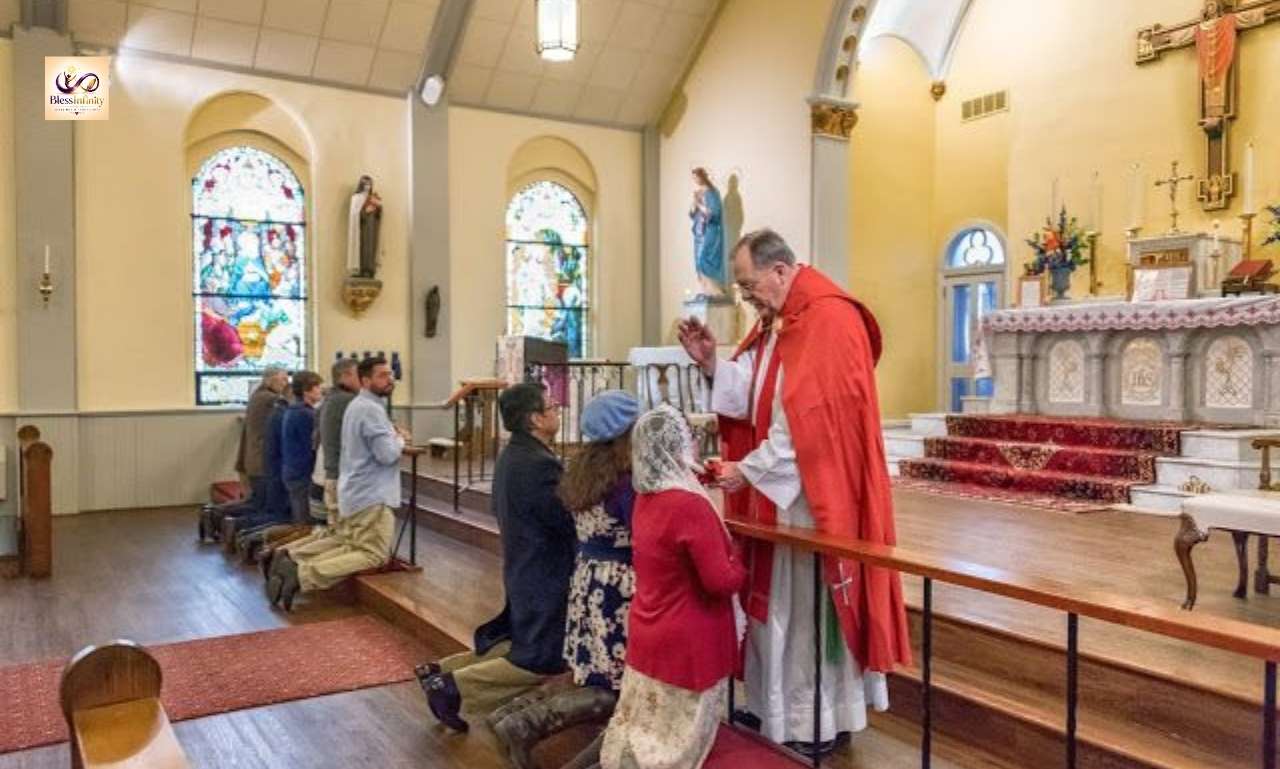
During the ceremony, two candles are held in the shape of a cross and touched gently to the throat of each person. The minister then prays a version of this well-known blessing of the throat prayer, rooted in the Church’s official liturgical books:
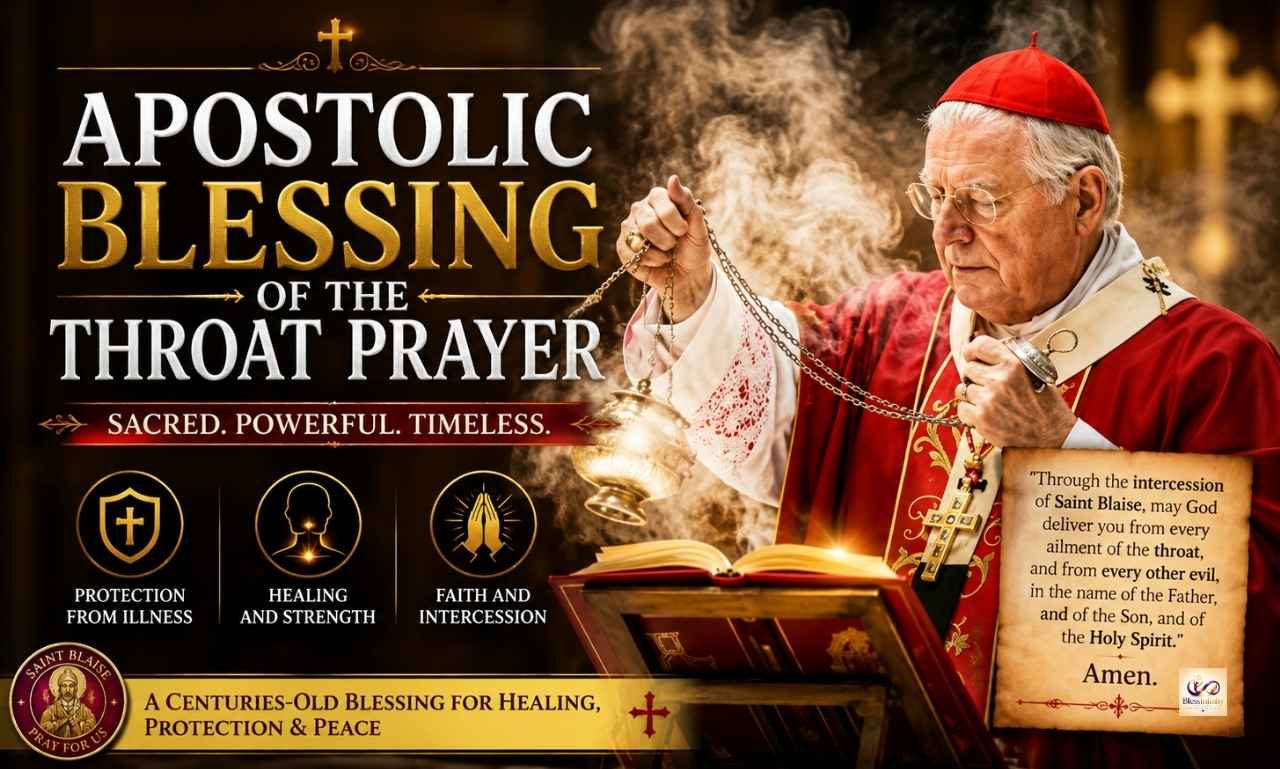
“Through the intercession of Saint Blaise, may God deliver you from every ailment of the throat, and from every other evil, in the name of the Father, and of the Son, and of the Holy Spirit.”
This wording has been passed down through generations, adapted slightly across different editions of the Roman Ritual and Book of Blessings, but the heart of it has never changed: an appeal for healing, spoken in Blaise’s name, sealed in the Trinity.
The official text for the Blessing of Throats is found in the Roman Catholic Book of Blessings (De Benedictionibus). Individual dioceses may use their own approved translations of this text, and wording can vary slightly from parish to parish, but every authorized version preserves the same essential meaning: healing through the intercession of Saint Blaise.
Some parishes use a longer form during Mass, which includes prayers of intercession for the sick, for doctors and nurses, and for caregivers before the individual blessing takes place. Others use the shorter form alone, especially when blessing large numbers of people during a single service.
A Simple Prayer You Can Say Anytime
Not everyone can get to a church on the Feast of St. Blaise, and illness doesn’t wait for a feast day. Many Catholics keep a personal version of the St. Blaise prayer for private use — said quietly at home, in a hospital room, or before bed when a sore throat won’t let up. A commonly prayed personal version, offered as prayer for throat healing, goes something like this:
Blessed Saint Blaise, you received from God the power to heal those suffering from illnesses of the throat. Watch over me now. Free me from this affliction, keep my throat strong and well, so that I may speak truth, sing praise, and comfort others with my voice. Through your intercession, may I be delivered from every sickness and kept in good health, for the glory of God. Amen.
This isn’t a replacement for the official liturgical blessing given by a priest or deacon, but it reflects the same spirit as the apostolic blessing of the throat prayer — asking for healing through Blaise’s intercession, in a form anyone can pray without ceremony or candles.
While this prayer offers spiritual comfort, it is not a substitute for professional medical care. Anyone experiencing severe or persistent throat problems, difficulty breathing, or difficulty swallowing should seek medical attention promptly, while also praying for healing.
Short Invocations for Everyday Use
Sometimes what you need isn’t a full prayer, just a few words to hold onto. These shorter invocations are drawn from the same tradition and work well as a quick prayer before a doctor’s visit, a difficult conversation, or a performance where your voice matters.
- “Saint Blaise, protect my throat and guard my voice today.”
- “Lord, through Blaise’s intercession, heal what troubles me.”
- “May God deliver me from every illness, through Saint Blaise’s prayers.”
- “Saint Blaise, pray for me, that I may speak with strength and truth.”
- “Heal my throat, Lord, and let my words bring good, not harm.”
- “By Blaise’s faith, may my sickness pass and my strength return.”
- “Saint Blaise, healer of the suffering, remember me in your prayers.”
- “Guard my voice, Lord, that I may use it only for good.”
- “Through this blessing, may sickness leave and peace remain.”
- “Saint Blaise, friend of the afflicted, ask God to restore me.”
Prayers for Family and Loved Ones
The Catholic blessing of the throat isn’t only personal — it’s often prayed over children, aging parents, singers, teachers, and anyone whose voice is central to their work or wellbeing. These lines are meant to be prayed over someone else, whether a parent blessing a child before school or a caregiver praying beside a hospital bed.
- “Saint Blaise, watch over my child’s throat and keep illness far from them.”
- “Lord, heal the one I love, and let Blaise’s prayers cover them.”
- “May this house be kept from throat sickness, through Saint Blaise’s care.”
- “Bless my mother’s voice, Lord, that she may sing and speak with ease.”
- “Saint Blaise, protect my student’s voice as they teach and lead.”
- “Guard my father’s throat, Lord, and let him find relief soon.”
- “May Saint Blaise carry our prayers for healing to the throne of God.”
- “Lord, keep my friend’s voice strong, that they may keep singing your praise.”
- “Saint Blaise, remember the sick child before you, and grant them peace.”
- “Through this small blessing, Lord, bring comfort to the one who suffers.”
Why This Blessing Still Resonates Today
There’s something almost startlingly practical about the apostolic blessing of the throat prayer compared to other Catholic devotions. It doesn’t ask for abstract virtue or spiritual insight — it asks for a working throat. The ability to eat without pain. To speak clearly. To sing at your granddaughter’s wedding or get through a work presentation without your voice giving out.
That specificity is exactly why people keep returning to it, year after year, feast day after feast day. Illness has a way of making faith feel very immediate. When a scratchy throat turns into three days of silence, or a child can’t swallow properly, most people aren’t reaching for theology — they’re reaching for hope they can hold onto.
This prayer gives them a name to call on, a gesture to receive, and words that connect them to millions of people who have prayed the exact same thing across seventeen centuries. Somewhere between a cherished keepsake and a family heirloom, the St. Blaise prayer has been carried quietly from one generation to the next, often without anyone writing it down.
It also carries a quiet reminder about the voice itself. The prayer doesn’t just ask for a healthy throat — older versions ask that the person’s words be used for truth, kindness, and praise rather than harm. That turns a physical request into something closer to a moral one: heal my throat, and help me use it well.
When to Use the Blessing of the Throat Prayer
- On the Feast of St. Blaise (February 3): the traditional day for the formal blessing at Mass or a parish service.
- When someone in your family is sick: a sore throat, cough, or voice loss are natural moments to pray this over a loved one.
- Before public speaking or singing: many performers, teachers, and clergy quietly pray a version of the apostolic blessing of the throat prayer before using their voice professionally.
- During cold and flu season: as a recurring prayer of protection through the winter months.
- In a hospital or before surgery: particularly for procedures involving the throat, thyroid, or vocal cords.
- As a bedtime prayer for children: a gentle way to introduce kids to the idea of asking saints for help.
- Anytime words matter: before a hard conversation, an apology, or a moment where what you say will carry weight.

Related Prayers Worth Knowing
If the apostolic blessing of the throat prayer speaks to you, a few related prayers and devotions expand naturally on the same themes of healing, protection, and intercession:
- Prayers to the Fourteen Holy Helpers for specific needs
- The Prayer to St. Raphael for healing and safe travel
- A Complete Guide to Catholic Sacramentals
- Healing Bible Verses for Comfort and Strength
- Morning Prayer for a Blessed Day
- Prayer for the Sick and Suffering
- Catholic Healing Prayers for Every Need
- The St. Michael Prayer for Protection
Frequently Asked Questions
What is the apostolic blessing of the throat prayer?
It’s a Catholic sacramental prayer, traditionally said with crossed candles touched to the throat, asking God through the intercession of Saint Blaise to protect a person from throat illness and other ailments.
What does the blessing of the throat protect against?
Traditionally, it’s associated with protection from throat ailments specifically — sore throats, choking, laryngitis, and swallowing difficulties — but the full prayer for throat healing also asks for deliverance from illness more broadly.
Why are candles used in the blessing of the throats?
Tradition holds that a woman brought Saint Blaise candles while he was imprisoned, to light his dark cell. Crossed candles have symbolized his intercession ever since and are used to physically touch the throat during the blessing.
When is the blessing of the throats performed?
It’s most commonly performed on or near February 3, the Feast of St. Blaise, often during or right after Mass, though some parishes offer it on the closest Sunday for convenience.
Can you bless your own throat at home?
You can’t perform the formal sacramental blessing yourself, since that requires an ordained minister, but you can absolutely pray a personal version of the St. Blaise prayer at home, asking for the same healing and protection.
What is the story of Saint Blaise and the fishbone?
According to tradition, a mother brought her choking son to Blaise while he was imprisoned. A fishbone was lodged in the boy’s throat, and after Blaise prayed over him, the bone came loose and the child recovered.
Is the blessing of throats only for Catholics?
The formal sacramental blessing is a Catholic and some Eastern Catholic practice, and it’s also observed in parts of the Anglican Communion. Anyone, regardless of denomination, can pray a personal prayer asking for Saint Blaise’s intercession.
Can non-Catholics receive the blessing of the throat?
Generally, yes. Most parishes offer the blessing to anyone present at the service, regardless of denomination, since it is a prayer of intercession rather than a sacrament requiring Church membership. It’s always respectful to check with the specific parish beforehand.
Can the blessing of the throat be received online?
No. Because it involves a physical gesture — crossed candles touched to the throat by an ordained minister — it cannot be validly received through a livestream or video. You can, however, pray a personal version of the St. Blaise prayer at home while watching or afterward.
Is the blessing of the throat a sacrament?
No. It’s a sacramental, not a sacrament. Sacramentals like the apostolic blessing of the throat prayer are sacred signs that prepare the faithful to receive grace, while sacraments such as Baptism and the Eucharist are instituted by Christ himself and carry a different theological significance.
Can children receive the blessing of Saint Blaise?
Yes. Children are frequently brought forward for the blessing, and many parents make it an annual tradition, especially during cold and flu season when young children are more prone to throat illness.
What Bible verse is associated with Saint Blaise?
There isn’t one specific verse tied directly to Saint Blaise, since his story comes from Church tradition rather than Scripture. However, many people pair this prayer with verses about healing, such as James 5:14–15, which speaks of prayer and anointing for the sick.
Do you have to be sick to receive the blessing?
No. Many people receive it as a preventive blessing, asking for continued health, not only when they’re already unwell.
This article is for devotional and informational purposes. For the full, official liturgical text used in your parish, consult the current edition of the Roman Ritual or Book of Blessings, or speak with your priest or deacon. If you are experiencing a medical emergency or severe symptoms, seek professional medical care immediately.
Read more about us.
Wedding Blessing Messages: 100+ Heartfelt Words to Write